Regeneration is a practice, not a label.
How We Raise Our Animals
“Regenerative” is often used broadly. On our farm, it means making management decisions that protect living roots, maintain ground cover, support animal health, improve water movement, and reduce avoidable disturbance. We would rather show you these practices than advertise them. The measurements and the pastures are open to anyone who visits. Contact us to schedule a visit.
There is no single rotation schedule that works in every season. Grass growth, rainfall, heat, animal condition, and previous grazing all affect what happens next.
We use grazing, rest, observation and recordkeeping to improve the conditions under which plants, soil organisms and livestock can thrive.
Cattle are natural grazers. When managed appropriately, their grazing can stimulate plant growth, return nutrients to the soil, and contribute organic matter through manure and trampled vegetation.
The important distinction is how the animals are managed. Simply putting cattle on pasture isn't automatically regenerative. Our goal is to manage grazing in a way that allows the land to continually recover and improve.


Does managed pasture capture carbon?
Plants naturally pull carbon dioxide from the atmosphere through photosynthesis and move carbon into plant roots and soil.
Healthy, biologically active soils can store carbon, and well-managed grazing can play a role in supporting that process. However, we don't believe regenerative agriculture should be reduced to a single claim about carbon.
For us, the goal is bigger: healthy soil, functioning ecosystems, clean water, thriving pastures, healthy animals, and nutritious food.
The working cycle.
Practical management, repeated across the seasons.

Healthy soil is living infrastructure.
Below the Surface
Roots, fungi, bacteria, insects, and earthworms all influence how soil cycles nutrients and receives water. Grazing management can support those processes when plants have enough time and leaf area to recover.
We therefore pay attention to outcomes we can observe or measure: ground cover, root development, infiltration, organic matter, forage recovery, and the need for outside inputs.

Related practices.

Start Shopping
-
Chicken, Whole
Regular price From $22.00Regular priceUnit price per -
Beef, Ground
Regular price $13.00Regular priceUnit price per -
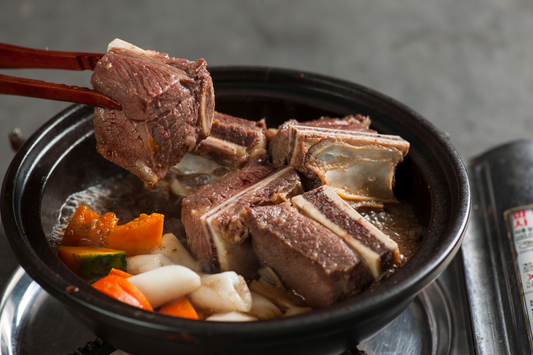
Beef, Short Ribs
Regular price $21.00Regular priceUnit price per -
Beef, Chuck Blade Roast (Bone-In)
Regular price $38.00Regular priceUnit price per